
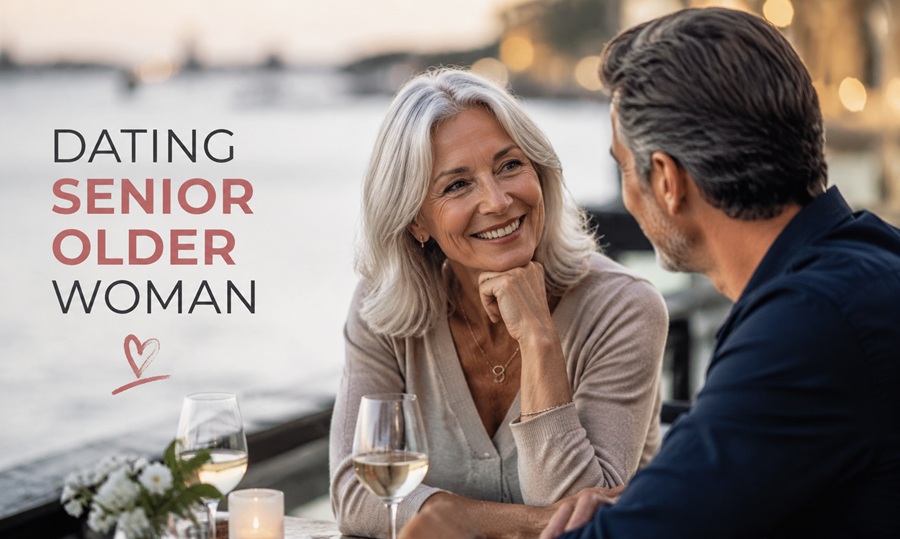
Age gaps in relationships draw a lot of assumptions, but the actual dynamics of dating an older woman come down to the same fundamentals as any relationship — communication, compatibility, and mutual respect — with a few specific considerations worth understanding upfront.
Quick Answer: Successfully dating an older woman typically comes down to genuine respect for her independence, honest conversations about life-stage differences (family, career, retirement timing), and not making assumptions based on stereotypes. Communication about expectations matters more here than in same-age relationships, simply because the life-stage gap can be wider.
What Actually Differs in Age-Gap Relationships
The age itself isn’t usually the core issue — it’s the different life stages that can come with it. An older woman may be more established in her career, have adult children, or be further along in financial planning than a younger partner. None of these are obstacles inherently, but they do require honest conversation rather than assumption.
Common Concerns and How to Handle Them
Life Stage Differences
- Career: She may be at a career peak or considering retirement while a younger partner is still building theirs
- Family: Adult children, grandchildren, or a desire not to have more kids may factor in differently than for a same-age partner
- Social circles: Friend groups may skew toward different generations, which can feel adjustment-worthy at first
Social Perception
Age-gap relationships sometimes draw unsolicited opinions from family, friends, or strangers. How much this affects the relationship usually depends on how confidently both partners handle outside commentary rather than internalizing it.
Health and Life Planning
Depending on the size of the age gap, conversations about long-term health, retirement timing, and life planning may come up earlier than in a typical same-age relationship. These conversations are worth having directly rather than avoiding.
What Tends to Work Well
- Genuine curiosity about her life experience rather than treating the age gap as a novelty
- Respecting her independence and established life rather than trying to “catch up” to it
- Clear, early conversations about what each of you wants long-term (marriage, kids, retirement plans)
- Not assuming she needs guidance or “figuring out” — she likely has more life experience navigating relationships than a younger partner
Red Flags to Watch For (On Either Side)
| Concerning Pattern | Why It Matters |
|---|---|
| Partner fixates on the age gap constantly | Suggests it’s a bigger factor than genuine connection |
| Either partner hides the relationship from family/friends | Signals discomfort worth addressing directly |
| Assumptions replace actual conversation about goals | Leads to mismatched expectations down the line |
| One partner expects the other to fully adapt to their life stage | Indicates imbalance rather than mutual compromise |
Questions Worth Asking Each Other Early
- Where do you see your career and lifestyle in the next five to ten years?
- How do you feel about kids, whether that’s having them, not having them, or blending existing family?
- How does our age difference show up practically in daily life for you?
- How do you want to handle outside opinions about our relationship?
Navigating Family and Social Reactions
Some families are entirely unbothered by age gaps; others need time to adjust. A steady, low-drama approach tends to work best — being open about the relationship without over-explaining or defending it constantly. Given time, most initial skepticism tends to soften once people see the relationship is genuine and functional.
FAQ
Is a significant age gap automatically a problem in a relationship?
No — research and relationship counselors generally point to compatibility, communication, and shared values as far stronger predictors of relationship success than age gap size alone.
How do I bring up long-term plans without seeming presumptuous early on?
Frame it as general curiosity rather than a demand for commitment — “What does your ideal next five years look like?” works well even in early dating.
Will an older woman want a serious relationship or something casual?
It varies entirely by individual, the same as with any partner — don’t assume based on age alone; ask directly.
How should I handle friends or family who have concerns about the age gap?
Listen to genuine concerns without being defensive, but don’t let outside opinions dictate a relationship that’s working well for both of you.
Do age-gap relationships face specific long-term challenges?
Sometimes, particularly around retirement timing or health considerations later on — worth discussing honestly rather than avoiding.
Is it different dating a much older woman versus one just a few years older?
Generally yes — a small gap often has minimal practical impact, while a larger gap may involve more distinct life-stage differences worth actively discussing.
Dating an older woman isn’t fundamentally different from any relationship in terms of what makes it work — honesty, respect, and genuine compatibility. The age gap mainly changes which specific conversations are worth having early, not whether the relationship can succeed.
