
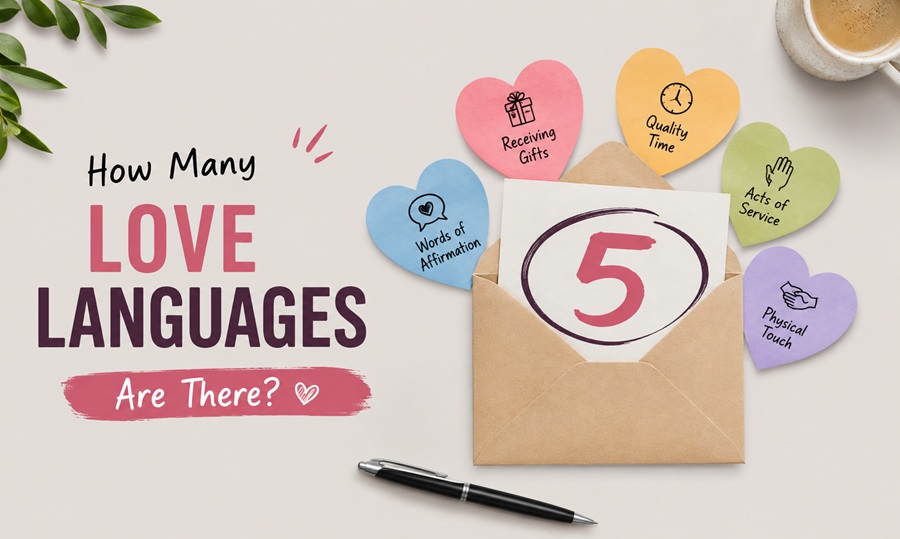
There are five love languages: words of affirmation, quality time, receiving gifts, acts of service, and physical touch. The concept comes from relationship counselor Dr. Gary Chapman, who introduced it in his book “The 5 Love Languages” as a way to describe the different ways people prefer to give and receive affection.
Most people connect with more than one language, but usually lean on one or two more heavily than the rest. Knowing which ones matter most to you, and to your partner, can make it a lot easier to understand why certain gestures land well while others fall flat.
The Five Love Languages Explained
1. Words of Affirmation
This is about verbal or written expressions of love and appreciation. A compliment, a thoughtful text, or a simple “I’m proud of you” can mean more to someone with this language than any gift or gesture. For these people, hearing that they’re valued isn’t a nice extra, it’s often the main way they feel loved at all.
2. Quality Time
This language centers on undivided attention. It’s not just being in the same room together; it’s putting the phone down, making eye contact, and actually engaging. Someone who values quality time will often feel disconnected if a partner is physically present but mentally checked out.
3. Receiving Gifts
This isn’t about materialism. It’s about the thought and effort behind a gift, whether that’s a $5 item that shows someone was really listening, or a handwritten note. For people with this language, a gift is a tangible symbol that they were on someone’s mind.
4. Acts of Service
Doing something helpful, like cooking dinner, running an errand, or fixing something around the house, is how this language expresses love. For people who value this most, actions genuinely speak louder than words. A partner who says “I love you” but never helps out can feel like their words don’t match their behavior.
5. Physical Touch
This covers everything from holding hands to hugs to sitting close on the couch. It doesn’t have to be romantic or sexual. For someone with this primary language, physical closeness is often how they feel most secure and connected in a relationship.
Why Five, and Not More
Chapman’s original framework was intentionally simple. Since the book’s release, other researchers and writers have proposed additional categories, like “shared experiences” or “physical presence,” but the original five remain the most widely referenced version of the concept. Some people find that a sixth or seventh category resonates with them personally, and that’s fine. The framework is meant to be a starting point for conversation, not a rigid rulebook.
It’s also worth noting that love languages describe preferences, not personality types. You’re not locked into one language forever, and your preferences can shift depending on the relationship, your current stress levels, or what stage of life you’re in.
How to Figure Out Your Love Language
If you’re not sure which language fits you best, a few simple questions can help:
- What do you request most often from a partner? If you frequently ask for more compliments, that points to words of affirmation. If you ask for more one-on-one time, that’s quality time.
- What hurts the most when it’s missing? Feeling hurt by a forgotten anniversary points toward gifts. Feeling hurt by a lack of physical closeness points toward touch.
- What do you naturally do for others? People often give love the way they want to receive it, so pay attention to how you show affection.
There are also free online quizzes based on Chapman’s original questionnaire that can give you a more structured starting point, though they’re best used as a conversation starter rather than a definitive answer.
Using Love Languages in a Relationship
Understanding the five languages is only useful if you actually apply them. A few practical ways to do that:
- Ask your partner directly which language feels most meaningful to them, rather than guessing.
- Notice what they complain about or seem to appreciate most, since this often reveals their language even if they haven’t named it.
- Try to speak their language even when it’s not naturally yours. If your partner values acts of service and you’re a words person, make an effort to help out more, even if it doesn’t come as naturally as a kind text.
- Revisit the conversation periodically. Preferences can change after a move, a new job, having kids, or any major life shift.
Mismatched love languages aren’t a sign of incompatibility. They’re common, and most couples have at least one language gap. The goal isn’t to force yourself to become someone you’re not, but to become fluent enough in your partner’s language that they feel loved in a way they actually recognize.
Frequently Asked Questions
Can someone have more than one primary love language?
Yes. Many people identify strongly with two languages rather than just one, and it’s common for the ranking to shift slightly depending on context or relationship.
Do love languages apply outside of romantic relationships?
Yes. Friends, family members, and even coworkers can have preferred ways of feeling appreciated, and the same five categories often apply.
Is there a scientifically validated sixth love language?
Not in Chapman’s original model. Some relationship experts have proposed additional categories over the years, but the five original languages remain the standard reference point.
Can your love language change over time?
It can. Life circumstances, stress, and relationship stage can all shift which language feels most important to you at a given point.
Is one love language better than the others?
No. Each language reflects a different but equally valid way of expressing and receiving affection. None is inherently more meaningful than another.
Knowing there are five love languages is the easy part. The real value comes from paying attention to how you and the people close to you actually give and receive affection, and adjusting accordingly. That kind of awareness tends to do more for a relationship than any single grand gesture.
