
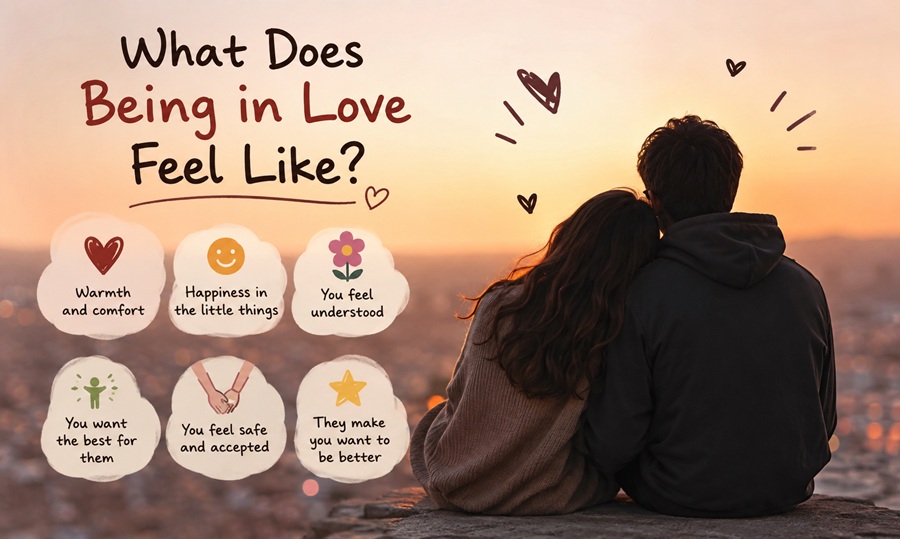
You keep thinking about them at random moments during the day. Small things remind you of them. You feel a mix of excitement and nervousness when you know you’ll see them soon. If that sounds familiar, you might be wondering whether what you’re feeling is love, infatuation, or something else entirely.
Being in love doesn’t feel the same for everyone, and it doesn’t feel the same at every stage of a relationship either. What it feels like in the first few weeks is often very different from what it feels like two years in. Here’s a closer look at the signs, the stages, and how to tell the difference between love and simple attraction.
The Early Signs
In the beginning, being in love tends to feel intense, sometimes overwhelmingly so.
You might notice:
- A near-constant urge to check your phone for a message from them
- Difficulty focusing on work or other responsibilities
- A heightened sense of optimism about the future, even in small ways
- Nervousness or a fluttery feeling before seeing them
- Wanting to share every small detail of your day with them
This stage is often driven by a mix of dopamine and adrenaline, the same chemicals involved in reward and stress responses. That’s part of why new love can feel almost addictive. It’s exciting, but it’s also mentally exhausting, since your brain is essentially on high alert around this person.
The Emotional Signs
Beyond the physical rush, there are emotional markers that tend to show up when someone is genuinely falling in love rather than just infatuated:
You feel safe being yourself
Instead of just performing your best qualities, you start showing your quirks, your bad days, and your unfiltered opinions, and you feel okay doing it.
Their wellbeing starts to matter as much as your own
A rough day for them can affect your mood too, and you find yourself genuinely invested in their goals and struggles, not just your shared time together.
You want to know their full story
Not just the highlight reel, but their past, their fears, their family dynamics, the things that shaped them.
You start picturing a future that includes them
This doesn’t have to mean marriage or moving in together right away. It can be as simple as mentally including them in plans months out.
The Physical Signs
Love shows up in the body too, not just the mind.
- Increased energy or motivation, even on days you’d normally feel sluggish
- A physical sense of calm or comfort when you’re near them
- Butterflies or a racing heart, especially in the earlier stages
- Better sleep on nights you’ve spent time with them, or restlessness when something feels unresolved between you
These physical responses tend to fade in intensity as a relationship matures, which is completely normal. It doesn’t mean the love is fading, it usually means it’s settling into something steadier.
How It Changes Over Time
The butterflies-and-obsession phase typically shifts after the first several months to a year. This doesn’t mean love disappears, it changes shape.
Long-term love tends to feel more like:
- A quiet sense of partnership rather than constant excitement
- Comfort in silence together, not just constant conversation
- Trust that doesn’t need to be tested or proven repeatedly
- A feeling of being a team, especially during stress or hard decisions
- Less urgency, more consistency
Some people mistake this shift for falling out of love, when really it’s a natural transition from the infatuation stage into what researchers often call companionate love. Both stages are real, they just feel different.
Love vs. Infatuation vs. Lust
These three get confused often, but they tend to differ in a few key ways.
Infatuation is intense but usually surface-level. It’s often based on limited information about a person, an idealized version of who they might be rather than who they actually are. It tends to fade quickly once real challenges or incompatibilities show up.
Lust is primarily physical attraction. It can exist with or without emotional connection, and on its own, it doesn’t require knowing someone deeply.
Love usually includes elements of both, but it’s distinguished by depth: wanting to understand someone fully, accepting their flaws, and choosing to stay invested even when the initial excitement fades.
If your feelings hold up once you’ve seen someone at their worst, not just their best, that’s often a stronger indicator of love than the early rush of emotion.
When the Feeling Isn’t Mutual or Consistent
It’s worth noting that intense feelings on their own aren’t proof of a healthy relationship. If the excitement is present but you consistently feel anxious, unsure where you stand, or like you’re chasing reassurance, that pattern is worth paying attention to. Genuine love tends to come with a sense of security, not constant uncertainty.
Frequently Asked Questions
How long does the “falling in love” feeling usually last?
For most people, the most intense phase lasts anywhere from a few months to around two years before settling into a steadier form of attachment.
Can you be in love without feeling butterflies?
Yes. Butterflies are common early on, but many long-term relationships involve deep love without that constant physical rush.
Is it normal to feel scared when you’re falling in love?
Yes, some nervousness or vulnerability is common, especially if you’ve been hurt before or are worried about being fully known by someone.
How is love different from a strong crush?
A crush is often based on limited interaction and idealized impressions. Love typically develops through repeated exposure to someone’s full self, including their flaws.
Can you fall in love more than once in the same relationship?
Yes. Many couples describe periods of rediscovering love for each other after time apart, a hard season, or simply after growing together in new ways.
Being in love isn’t one single feeling, it’s a collection of signals that shift over time. If you’re noticing more of these patterns than not, especially the ones tied to comfort, trust, and genuine curiosity about someone’s life, there’s a good chance that’s exactly what you’re experiencing.
