
Nearly two-thirds of people, when asked how they prefer to receive affection, gravitate strongly toward one specific style over the others — and mismatches in this area are one of the quieter reasons couples feel disconnected even when nothing is technically “wrong.”
Quick Answer: Your love language is the way you most naturally feel loved and show love to others — one of five categories: words of affirmation, quality time, acts of service, physical touch, or receiving gifts. You can identify yours by noticing what you complain about missing in relationships and what gestures move you most, even without taking a formal quiz.
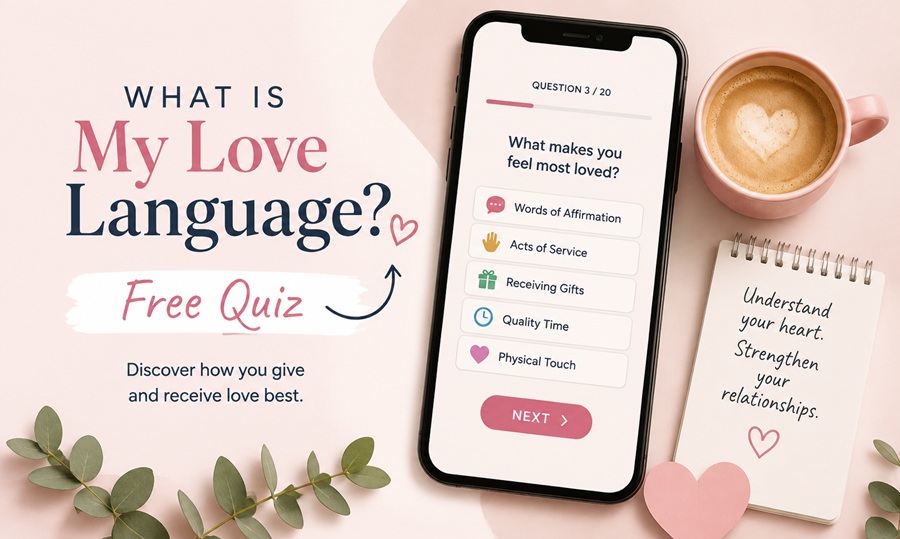
The Five Love Languages, Briefly
1. Words of Affirmation
Verbal appreciation, compliments, and encouragement land deepest here. A heartfelt “I’m proud of you” or an unprompted text saying something kind carries real weight.
2. Quality Time
Undivided attention is the currency. Sitting across from someone who’s on their phone the whole time feels like a real letdown, even if they’re technically “there.”
3. Acts of Service
Doing something helpful — making coffee, handling an errand, fixing something around the house — reads as love more clearly than words do.
4. Physical Touch
Hugs, hand-holding, sitting close on the couch. This isn’t only about romantic or sexual touch; small physical gestures of connection matter just as much.
5. Receiving Gifts
Not about materialism — it’s about the thoughtfulness behind a gift, the sense that someone was thinking of you when you weren’t together.
How to Figure Out Your Love Language Without a Formal Quiz
A quiz can help, but you can also identify your love language through a bit of self-reflection:
- What do you find yourself complaining about most in past relationships? (“They never say anything nice” points to words of affirmation; “we never spend real time together” points to quality time.)
- What gesture from a partner makes you feel most instantly appreciated?
- When you want to show someone you love them, what do you naturally do first?
- Think back to a moment you felt deeply loved — what was actually happening in that moment?
Love Languages at a Glance
| Love Language | What It Looks Like | A Simple Way to Give It |
|---|---|---|
| Words of Affirmation | Verbal praise, encouragement | Send an unprompted compliment |
| Quality Time | Full attention, shared activities | Put your phone away during a conversation |
| Acts of Service | Helpful actions | Handle a task before being asked |
| Physical Touch | Hugs, closeness | A hand on the shoulder, sitting close |
| Receiving Gifts | Thoughtful tokens | A small item that shows you were listening |
Why Knowing Your Love Language Matters
Relationships often go sideways not because love is absent, but because it’s being expressed in a language the other person doesn’t fully register. A partner doing chores tirelessly (acts of service) might feel unappreciated by someone whose language is words of affirmation, because the effort, while real, doesn’t land the same way.
Once both people understand their own language and their partner’s, small adjustments can meaningfully shift how loved each person feels day to day.
It’s Rarely Just One
Most people have a primary love language and a secondary one that also matters, just less intensely. It’s worth identifying both rather than assuming a single category explains everything about how you experience love.
Using This in an Actual Relationship
- Share your love language with your partner directly rather than expecting them to guess
- Ask about theirs in return — this works both ways
- Try translating your natural instincts into your partner’s language occasionally, even if it doesn’t come naturally at first
- Revisit the conversation periodically; love languages can shift somewhat over time or in different life stages
Common Questions
Can your love language change over time?
It can shift somewhat, particularly across major life changes, but most people have a fairly consistent primary language throughout adulthood.
Is it possible to have two equally strong love languages?
Yes, plenty of people feel closely tied between two categories rather than having one dominant language.
Does knowing my love language fix relationship problems on its own?
No — it’s a helpful framework, not a complete solution. It works best alongside good communication generally.
What if my partner and I have completely different love languages?
That’s extremely common and not a red flag by itself. The key is willingness from both sides to occasionally speak the other’s language.
Are love languages backed by research?
The concept originated from a popular relationship book rather than formal psychological research, though many therapists find it a useful communication framework in practice.
Can love languages apply to friendships and family too?
Yes — the same framework often applies well beyond romantic relationships.
Bottom Line
Figuring out your love language isn’t about boxing yourself into one label — it’s about getting language for something you likely already feel instinctively. Once you can name it, you can ask for it directly, and that alone tends to make relationships feel a little less like guesswork.
