
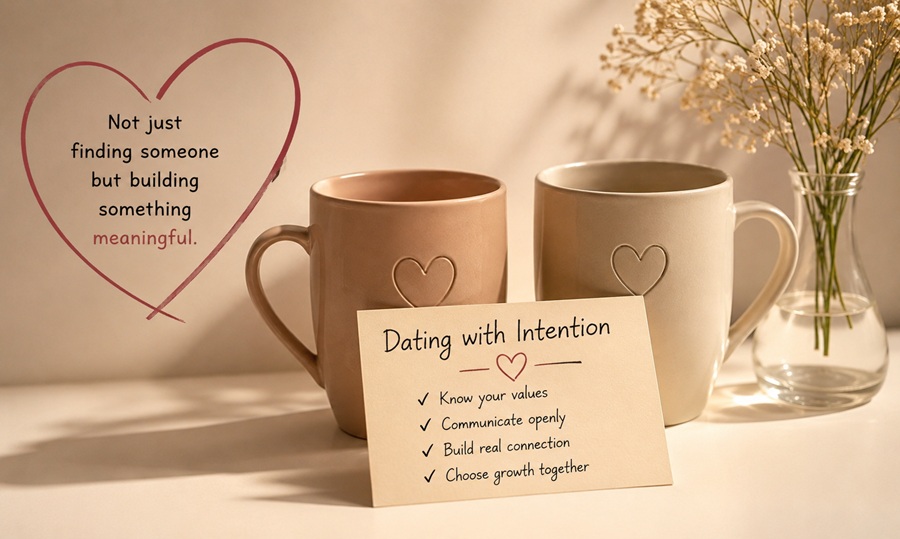
Dating with intention means approaching dating with a clear sense of what you actually want, rather than going out with people just to pass the time or avoid being alone. It’s the difference between drifting through dates and treating each one as a genuine step toward a relationship (or clarity about what you don’t want).
If you’ve ever come out of a string of casual dates feeling more confused than when you started, intentional dating is likely the shift you’re looking for. Here’s how to actually put it into practice.
What Dating With Intention Actually Means
It doesn’t mean rushing into commitment or interrogating every date about their five-year plan. It means:
- Knowing your own relationship goals before you start swiping or accepting dates
- Being upfront about what you’re looking for, instead of keeping things vague to avoid rejection
- Evaluating compatibility honestly, rather than ignoring red flags because someone is charming or attractive
- Ending things that clearly aren’t working instead of letting them drag on out of comfort or habit
Intentional dating is proactive. Casual, undirected dating tends to be reactive, you go on dates because someone asked, not because you’ve actually thought about whether it fits what you want.
Why It Matters
A lot of dating frustration comes down to mismatched expectations that never got addressed early. One person is looking for something serious, the other is enjoying something casual, and neither says so directly. Weeks or months later, someone gets hurt, not because the other person did anything malicious, but because nobody clarified intentions from the start.
Dating with intention reduces this kind of friction. It doesn’t guarantee a relationship will work out, but it does mean you’ll usually find out sooner whether it’s worth continuing, which saves both people time and emotional energy.
Getting Started: Know What You Want First
Before you can date intentionally, get specific about what you’re actually looking for. Vague answers like “someone nice” or “good vibes” aren’t detailed enough to guide real decisions. Try answering these instead:
- Am I looking for something casual, committed, or am I open to either depending on the person?
- What are three non-negotiables I need in a partner? (Not preferences, actual dealbreakers.)
- What patterns from past relationships do I want to avoid repeating?
- What kind of partner am I actually ready to be right now, given my current life circumstances?
Writing these down, even briefly, tends to make them easier to hold onto once you’re actually on a date and swept up in someone’s energy.
Communicating Intentions Without Being Off-Putting
One of the biggest hesitations people have around intentional dating is fear of coming on too strong. There’s a difference between stating your intentions and pressuring someone else to match them immediately.
A few ways to communicate clearly without overwhelming someone:
- Mention your general dating goals early and casually, not as a formal announcement. Something like, “I’ve been dating with the goal of finding something long-term,” said naturally in conversation, works better than a scripted speech.
- Ask about their intentions too, rather than only sharing your own. This should be a two-way conversation.
- Pay attention to how they respond, not just what they say. Someone who avoids the topic repeatedly is telling you something too.
Evaluating Compatibility Honestly
Intentional dating requires being willing to see things clearly, even when it’s inconvenient. A few areas worth genuinely evaluating, ideally within the first several dates:
Communication style
Do they follow through on what they say? Do conversations feel easy, or does it feel like pulling information out of them?
Core values
Views on family, money habits, ambition, and lifestyle pace matter more long-term than shared hobbies or instant chemistry.
Consistency
Do their actions match their words over multiple interactions, not just the first date?
How they treat other people
How someone speaks about an ex, treats service staff, or handles small inconveniences often reveals more than anything they say directly to you.
Common Mistakes to Avoid
Confusing chemistry with compatibility – Strong attraction can make it easy to overlook mismatched values or goals. Chemistry matters, but it isn’t the same as long-term fit.
Ignoring early red flags – If something feels off in the first few dates, it rarely improves on its own later. Give it appropriate weight instead of explaining it away.
Staying too long out of sunk cost – If you’ve invested weeks or months into someone and it’s becoming clear the fit isn’t there, ending it earlier is usually less painful than continuing out of habit or fear of starting over.
Being intentional with your goals but passive with communication – Knowing what you want internally doesn’t help if you never actually express it to the person you’re dating.
Trying to date intentionally with too many people at once – Intentional dating works best with focus. Spreading your attention across too many people at the same time often waters down your ability to genuinely evaluate any single connection.
Putting It All Together
Dating with intention isn’t about being rigid or overly serious on every date. It’s about staying honest with yourself and with the people you’re dating, so that time and energy go toward relationships that actually have a real chance, rather than ones kept alive by momentum or fear of being alone.
Frequently Asked Questions
Does dating with intention mean I have to know exactly what I want right away?
No. It’s fine to refine your goals over time. The key is staying honest with yourself as those goals become clearer, rather than ignoring the process altogether.
Is it too forward to bring up long-term goals on an early date?
Not if it’s done naturally and isn’t framed as a demand. Most people appreciate directness more than ambiguity, even if it feels uncomfortable at first.
Can dating with intention work with dating apps?
Yes. Being clear about your goals in your profile and conversations can actually filter out mismatches faster than vague, generic messaging.
What if the person I’m dating isn’t ready to define what they want?
That’s useful information on its own. It doesn’t necessarily mean the relationship is doomed, but it’s worth being clear-eyed about the uncertainty involved.
How is intentional dating different from just being picky?
Being picky often means rejecting people for surface-level reasons. Intentional dating focuses on genuine compatibility and clear communication, not arbitrary standards.
Dating with intention takes a bit more upfront honesty than casual dating, but it tends to pay off in clarity, whether that means finding the right relationship faster or realizing sooner when something isn’t the right fit.
