
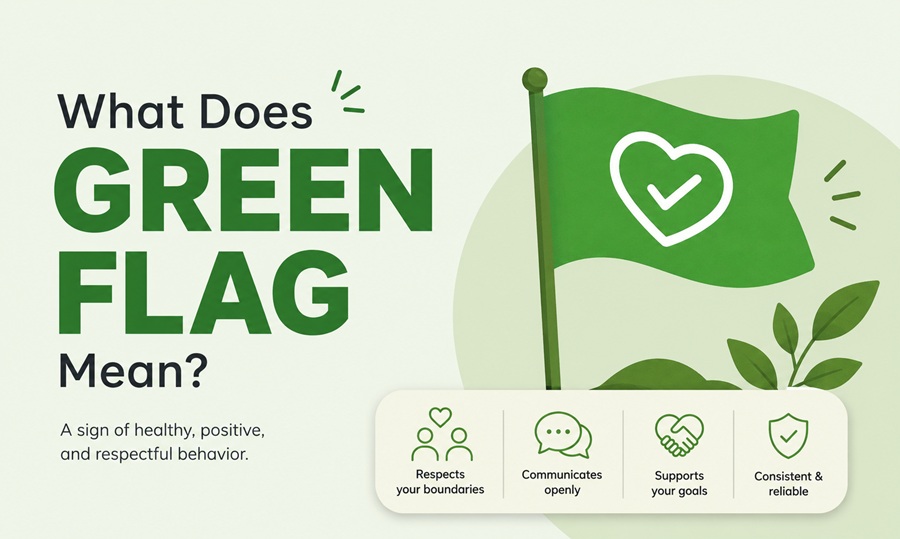
Q: Where did the term ‘green flag’ come from?
A: It emerged as the natural counterpart to ‘red flag’ in dating culture, popularized heavily through social media, as a shorthand for positive signs someone is a genuinely good, healthy partner rather than just someone free of obvious red flags.
Q: Is a green flag just the absence of red flags?
A: Not exactly. A relationship can be free of red flags but still lack green flags — meaning it’s not harmful, but it’s also not particularly healthy or fulfilling. Green flags represent active, positive qualities, not just the absence of dysfunction.
Q: What are the most common green flags people look for?
A: While personal preferences vary, relationship experts and daters consistently point to a core set of behaviors that indicate emotional maturity and relationship readiness.
- Clear, direct communication, even about uncomfortable topics
- Consistency between what they say and what they actually do
- Genuine accountability when they make a mistake
- Respect for your boundaries without pushback or guilt-tripping
- Comfort with you having an independent life and friendships
- Emotional regulation during disagreements
- Curiosity about your life, opinions, and feelings
- Follow-through on plans and commitments
- Encouragement of your personal goals and growth
- Healthy relationships with friends and family
- Willingness to apologize sincerely, without deflecting blame
- Treats service staff and others with basic respect and kindness
Q: How is a green flag different from just ‘being nice’?
A: Politeness is surface-level and easy to perform early in dating. Green flags run deeper — they show up consistently, especially in situations with nothing to gain, like how someone treats a server, handles an inconvenience, or responds when you disagree with them.
Q: Can green flags be faked early in dating?
A: To some degree, yes — most people put their best foot forward early on. That’s why the strongest green flags are the ones that hold up over time and across different circumstances, particularly stress, rather than only appearing during the honeymoon phase.
| Green Flag | What It Looks Like in Practice |
| Emotional regulation | Stays calm and communicative during disagreements |
| Accountability | Owns mistakes without deflecting or minimizing |
| Consistency | Words and actions match over weeks and months |
| Respect for boundaries | Accepts ‘no’ without guilt-tripping or pressure |
Q: Are green flags the same for everyone?
A: The core ones — respect, honesty, accountability — tend to be broadly agreed upon. But some green flags are more personal, reflecting individual values, like a shared sense of humor, similar ambition levels, or specific communication styles that work well for you specifically.
| Tip: Instead of only watching for green flags in how a partner treats you, pay attention to how they treat people who can’t benefit them in any way — that’s often the clearest signal of genuine character. |
Q: Why has ‘green flag’ become such a popular dating term?
A: Dating culture has spent years focused heavily on identifying red flags and avoiding toxic patterns, which is valuable, but it also risks framing dating primarily around fear and vigilance. ‘Green flag’ emerged partly as a corrective — a way to actively name and celebrate healthy behavior, not just screen out unhealthy behavior. It shifts the mindset from ‘what’s wrong with this person’ to ‘what’s genuinely good here,’ which many daters have found to be a more sustainable, less anxious way to evaluate potential partners.
Q: How do you build more green flags into your own behavior?
A: Since green flags describe emotionally healthy relationship behavior, they’re not exclusively something to look for in others — they’re worth cultivating in yourself too. Practicing direct communication, taking ownership of mistakes without deflecting, and respecting a partner’s boundaries are skills that can be developed intentionally, not just traits some people are simply born with. Many daters find that becoming more aware of green flags in others naturally makes them more conscious of embodying those same qualities themselves.
Q: What role does attachment style play in recognizing green flags?
A: Attachment style, formed largely in early relationships and childhood, significantly influences what feels ‘normal’ or comfortable in a partner, which isn’t always the same as what’s actually healthy. Someone with an anxious attachment style may initially find calm, consistent partners boring compared to the more intense, unpredictable dynamics they’re used to, while someone with an avoidant style might misread a partner’s genuine emotional openness as overwhelming. Understanding your own attachment tendencies can help you recognize when you’re dismissing a genuine green flag simply because it feels unfamiliar, rather than because it’s actually a poor fit.
Q: How do green flags show up differently in long-distance relationships?
A: Long-distance relationships remove some of the everyday, in-person context that normally reveals character — how someone handles small daily frustrations, treats service staff, or interacts with your social circle. In these relationships, green flags tend to show up more through communication patterns: consistency in staying in touch, follow-through on visit plans, comfort discussing the future of the long-distance arrangement, and emotional availability despite the physical distance. Buyers of this dynamic should weigh communication-based green flags especially heavily, since fewer other data points are available.
Frequently Asked Questions
What is considered the biggest green flag in a relationship?
Consistent accountability — genuinely owning mistakes without deflecting — is frequently cited as one of the strongest green flags, since it predicts how well a partner will handle future conflict.
How soon can you spot green flags when dating someone new?
Some green flags, like basic respect and communication style, show up within the first few dates, while deeper ones like consistency and emotional regulation typically take a few months to confirm.
Can a person have green flags and red flags at the same time?
Yes, most people do. The important thing is evaluating the overall pattern and whether the green flags outweigh and outlast any concerning behaviors.
Is ‘green flag’ just a trend, or does it reflect real relationship psychology?
While the specific term is a modern cultural phrase, the underlying concept — recognizing markers of emotional health and compatibility — is well grounded in established relationship research.
What’s a subtle green flag people often overlook?
How someone talks about their exes and past relationships is a frequently overlooked green flag; balanced, non-vindictive reflection often signals emotional maturity.
Green flags aren’t about finding someone flawless — they’re about recognizing the specific, consistent behaviors that make a relationship feel safe, respectful, and genuinely good to be in. The more of them you can spot early and see hold up over time, the stronger the foundation you’re likely building on.
