
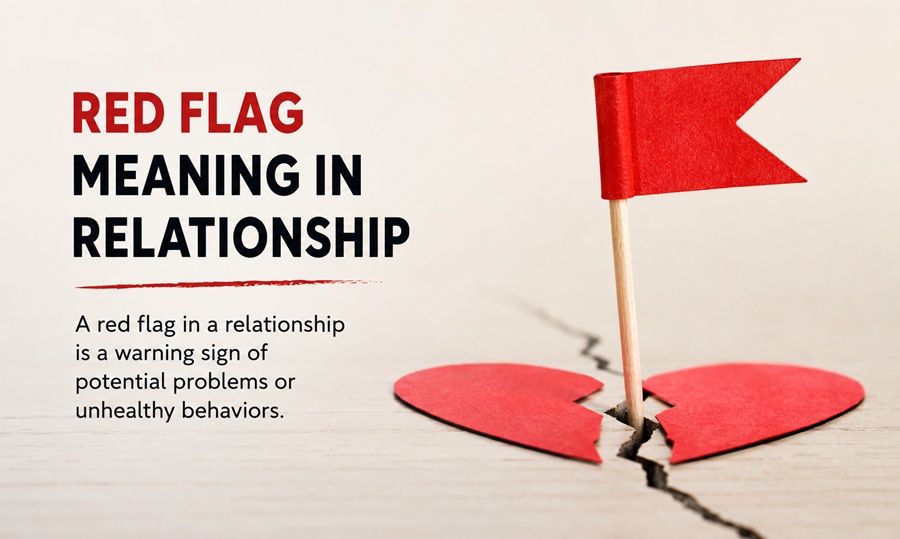
In relationships, a ‘red flag’ refers to a behavior or pattern that signals potential dysfunction, disrespect, or harm — such as controlling behavior, dishonesty, or disregard for boundaries. Red flags range in severity from minor concerns worth watching to serious warning signs that justify ending the relationship.
GLOSSARY: RED FLAG (dating term) — a behavioral or emotional warning sign that suggests a partner or relationship may become unhealthy, unstable, or harmful if the pattern continues unaddressed. Below, red flags are organized by severity, from early cautionary signs to serious risk indicators.
Tier 1: Early Caution Signs
These behaviors alone aren’t necessarily dealbreakers, but they’re worth watching closely for whether they’re isolated incidents or patterns.
- Inconsistent communication with no clear explanation
- Being vague or evasive about their past relationships
- Frequently canceling plans last minute
- Difficulty taking accountability for small mistakes
- Making major decisions without ever consulting you
Tier 2: Moderate Concerns
These signs suggest deeper compatibility or character issues that typically require a direct conversation, and possibly professional support, to resolve.
- Consistent dismissiveness of your feelings or opinions
- Excessive jealousy framed as ‘caring too much’
- Discomfort with you spending time with friends or family
- Pattern of broken promises without meaningful change
- Using guilt to influence your decisions
Tier 3: Serious Warning Signs
These behaviors are widely recognized by relationship professionals as indicators of an unhealthy or potentially harmful dynamic, and generally warrant serious reconsideration of the relationship.
- Controlling behavior around your finances, appearance, or social life
- Any form of verbal, emotional, or physical intimidation
- Isolating you from friends and family
- Explosive anger or unpredictable mood swings
- Repeated dishonesty about significant matters
| Severity | Example Behavior | Recommended Response |
| Early caution | Inconsistent texting | Observe for a pattern, communicate directly |
| Moderate | Excessive jealousy | Address directly, consider whether it changes |
| Serious | Controlling or intimidating behavior | Prioritize safety, seek support, consider ending the relationship |
Red Flags vs. Normal Relationship Friction
Not every disagreement or imperfect moment is a red flag. Genuine red flags are patterns, not isolated bad days. A partner who’s occasionally distracted during a stressful week is different from a partner who consistently dismisses your feelings regardless of context.
What to Do When You Notice a Red Flag
- Name the specific behavior directly to your partner, without accusation
- Watch how they respond — accountability and change matter more than apologies alone
- Talk to a trusted friend or therapist to get outside perspective
- Trust your own discomfort, even if you can’t fully explain it yet
- If the behavior involves control, intimidation, or safety concerns, prioritize an exit plan and support resources over trying to fix the relationship alone
Why We Sometimes Ignore Obvious Red Flags
Recognizing a red flag intellectually and acting on it emotionally are two very different things. Early attraction, hope for the relationship’s potential, and a natural tendency to give people the benefit of the doubt can all make it easy to rationalize away behavior that would be obvious to an outside observer. This is one reason trusted outside perspective — a close friend, family member, or therapist — is so valuable; they’re less emotionally entangled and can often see patterns more clearly than you can from inside the relationship.
How Red Flags Show Up Differently Across Relationship Stages
Early in dating, red flags often appear subtly — inconsistency, vague answers about the past, or reluctance to introduce you to their circle. In longer-term relationships, red flags tend to escalate gradually rather than appear suddenly, which makes them easier to normalize over time. A behavior that would have ended things in month one can start to feel routine by year three if it’s crept in slowly enough. Periodically stepping back and evaluating the relationship as if you were seeing it for the first time can help counter this gradual normalization.
How Friends and Family Can Help You See Red Flags Clearly
One of the most reliable early-warning systems for red flags isn’t your own perception — it’s the people who care about you and aren’t emotionally entangled in the relationship. Friends and family often notice concerning patterns well before you’re ready to acknowledge them yourself, precisely because they’re not experiencing the highs of the relationship that can make you more forgiving of the lows. If multiple people you trust independently raise similar concerns, that convergence is worth taking seriously, even if your own instinct is to defend the relationship.
That said, not every piece of outside feedback is equally valid — a friend with their own unresolved baggage around relationships, or someone who simply doesn’t like your partner personally, isn’t necessarily seeing things clearly either. Weigh feedback based on the specificity of the concern and whether it’s echoed by more than one source, rather than treating any single opinion as automatically correct.
Documenting Patterns Without Becoming Hypervigilant
For people who struggle to trust their own read on a situation, keeping a private, brief journal of specific incidents — dates, what happened, how it made you feel — can be useful for spotting patterns objectively rather than relying on memory alone, which tends to soften over time. The goal isn’t to build a case against your partner or approach the relationship with suspicion; it’s simply to have an honest, factual record to refer back to when you’re trying to distinguish a genuine pattern from an isolated bad moment.
Getting Support If Red Flags Turn Out to Be Serious
If reflection, outside perspective, and direct conversation confirm that what you’re seeing is a serious pattern rather than an isolated incident, prioritize connecting with resources built specifically for this — a therapist experienced in relationship dynamics, a domestic violence hotline if safety is a concern, or simply a trusted support network who can help you think through next steps without judgment. Leaving an unhealthy relationship, particularly one involving control or intimidation, is rarely simple, and professional support can make both the decision and the transition significantly safer and more manageable.
Frequently Asked Questions
What’s the difference between a red flag and a dealbreaker?
A red flag is a warning sign that something may be wrong, while a dealbreaker is a specific behavior or trait someone has decided they won’t tolerate under any circumstances, regardless of other factors.
Can red flags change over time?
Some can, especially early-stage caution signs, if a partner takes genuine accountability and demonstrates consistent change. Serious red flags involving control or intimidation are much less likely to resolve without professional intervention.
Is jealousy always a red flag?
Occasional, mild jealousy is common and not inherently harmful, but jealousy that leads to controlling behavior, accusations, or restricting your independence is a meaningful red flag.
How many red flags is too many?
There’s no fixed number — a single serious red flag involving safety or control matters more than several minor early-stage concerns.
What should I do if I notice a serious red flag involving safety?
Prioritize your safety first. Reach out to trusted friends, family, or a domestic violence hotline for support in creating a safe plan, rather than trying to resolve the situation alone.
Red flags exist on a spectrum, and learning to tell the difference between ordinary imperfection and a genuine warning sign is one of the most valuable relationship skills you can build. When in doubt, trust the pattern over the promise — and trust your own discomfort even when it’s hard to fully explain.
