
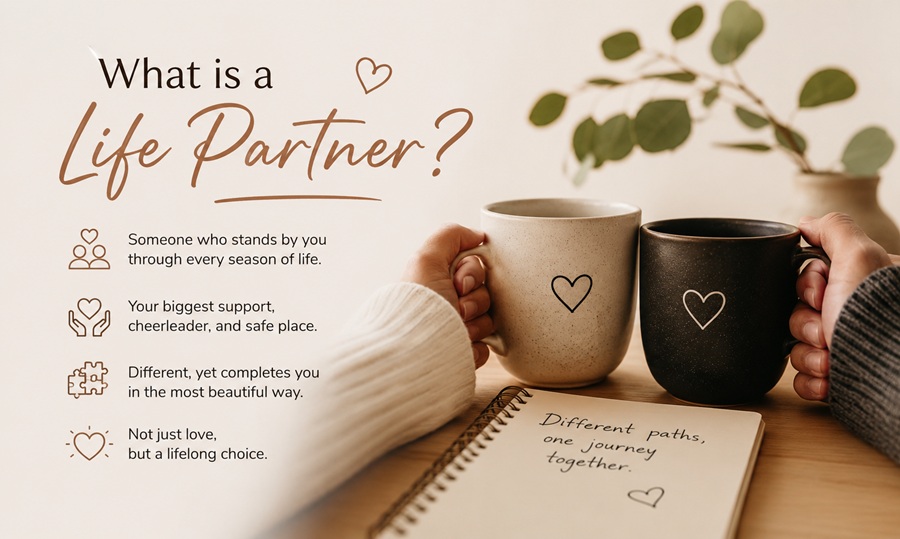
A life partner is someone you’ve chosen to build a long-term, committed future with, marked by deep trust, shared values, and mutual support through life’s changes — whether or not the relationship is formalized through marriage. The term emphasizes partnership and shared life direction over any specific legal or romantic label.
There’s a particular kind of quiet that settles into a relationship once it’s clear you’ve found your life partner. It’s not the electric, can’t-eat-can’t-sleep feeling of early attraction — it’s steadier than that, and in some ways, more remarkable. It’s the sense that whatever happens next, you’re facing it with someone, not alone.
Defining ‘Life Partner’
Unlike terms such as ‘boyfriend,’ ‘girlfriend,’ or even ‘spouse,’ ‘life partner’ isn’t tied to a specific relationship status or legal arrangement. It describes a role: someone committed to building a shared life with you over the long term, through both good stretches and hard ones. Married couples use it, but so do long-term unmarried partners, and increasingly, people in non-traditional relationship structures.
What distinguishes a life partner from a romantic partner more generally is the depth and permanence of the commitment. It implies a shared vision of the future — not just enjoying someone’s company now, but actively building something together over years and decades.
Signs Someone Is Your Life Partner
Recognizing a life partner isn’t about a single dramatic moment — it usually reveals itself gradually, through how someone shows up across different seasons of life.
- You naturally think in terms of ‘we’ when planning your future
- They’ve seen you at your worst and chosen to stay, without resentment
- Your major life goals and values genuinely align, not just your day-to-day interests
- You trust them with financial, emotional, and practical decisions
- Conflict between you tends to resolve rather than repeat indefinitely
- You feel more like yourself around them, not less
- They support your growth even when it changes the relationship dynamic
- You can imagine navigating hardship — illness, loss, major life changes — together
Life Partner vs. Soulmate: What’s the Difference?
‘Soulmate’ tends to imply a kind of destined, singular match — the idea that one specific person is fated to complete you. ‘Life partner’ is a more grounded, active concept: it’s built through consistent choice and effort over time, rather than discovered as a predetermined fact. Many long-term couples describe their relationship shifting from feeling like a soulmate connection early on to something that feels more like an intentional, ongoing life partnership.
| Concept | Core Idea | Emphasis |
| Soulmate | A singular, fated ideal match | Destiny, instant connection |
| Life partner | A chosen, built partnership | Commitment, shared effort, longevity |
| Spouse | A legally recognized marital partner | Legal status |
How a Life Partnership Is Built, Not Just Found
Perhaps the most important reframe is this: a life partnership isn’t purely discovered through compatibility — it’s actively built through repeated choices. Choosing to communicate honestly during conflict, choosing to support each other’s individual goals, choosing to stay curious about each other even after years together. Compatibility opens the door, but consistent effort is what actually sustains a life partnership long term.
Does a Life Partner Have to Be a Spouse?
No. While many life partners eventually marry, plenty of long-term, deeply committed couples choose not to formalize their relationship legally and still consider each other life partners in every meaningful sense. The term describes the depth and nature of the commitment, not its legal status.
What Changes When You Start Thinking of Someone as a Life Partner
There’s often a subtle but noticeable shift in how couples talk and plan once they begin thinking of each other as life partners rather than simply romantic partners. Decisions that once felt individual — where to live, career moves, big purchases — start getting weighed jointly, not because one person demands it, but because it stops making sense to plan a shared future in isolation. This shift usually happens gradually, through many small moments of choosing to include the other person, rather than through one defining conversation.
When the Timing Isn’t Right, Even With the Right Person
It’s worth acknowledging that sometimes two people who would make excellent life partners meet at the wrong time — one isn’t ready for commitment, life circumstances pull them in different directions, or personal growth hasn’t caught up yet. Recognizing someone’s potential as a life partner doesn’t guarantee the relationship will unfold that way; timing, readiness, and mutual choice all have to align, and that alignment isn’t always something either person can force.
How Life Partnerships Evolve Over Decades
A life partnership at year two looks meaningfully different from one at year twenty, even between the same two people. Early on, the relationship is often defined by discovery — learning each other’s habits, values, and rhythms, and figuring out how to merge two separate lives. Decades in, the partnership tends to be defined more by shared history and accumulated trust; the couple has weathered enough together that new challenges are met with a kind of confidence built on precedent, having navigated hard seasons before and come out still choosing each other. Long-term couples frequently describe this later stage as feeling less like maintaining a relationship and more like being fundamentally woven into each other’s lives — practically, emotionally, and often logistically inseparable, even while remaining two distinct people.
Red Flags That Someone Isn’t Life-Partner Material
- Consistent avoidance of any future-oriented conversation, even after significant time together
- Unwillingness to make sacrifices or compromises for the relationship’s sake
- A pattern of prioritizing personal convenience over shared commitments
- Difficulty being emotionally present during your hardest moments
- Resistance to blending your life and theirs in practical, tangible ways over time
Frequently Asked Questions
How do you know if someone is your life partner?
Key signs include shared long-term goals, deep trust, consistent support through hardship, and a relationship that resolves conflict rather than repeating the same patterns indefinitely.
Is ‘life partner’ the same as ‘domestic partner’?
Not exactly. ‘Domestic partner’ often carries specific legal implications in certain jurisdictions, while ‘life partner’ is a broader, more personal term describing the depth of commitment rather than legal status.
Can you have more than one life partner?
For most people, the term implies a singular primary long-term commitment, though some individuals in polyamorous relationships use the term more broadly to describe multiple committed partnerships.
Do you need to be married to call someone your life partner?
No. Many long-term, deeply committed couples use ‘life partner’ specifically because it doesn’t require legal marriage to be meaningful.
What’s the biggest difference between dating someone and having a life partner?
The key difference is the depth of long-term commitment and shared vision — dating often centers on present enjoyment, while a life partnership centers on actively building a shared future.
Finding a life partner isn’t about waiting for a perfect, effortless match to appear. It’s about recognizing someone who consistently chooses you — and who you consistently choose back — through the ordinary and difficult stretches of life alike. If that describes what you have, you’ve likely already found yours, even if you haven’t put the label on it yet.
